01Lighting
Check skin in steady daylight or neutral light.
The makeup notebook / Undertone
Lighting, comparison, clues. Record what you see.
Look inspiration on named skin tones, not tested swatches or a diagnosis.
Check skin in steady daylight or neutral light.
Compare against a neutral white and black.
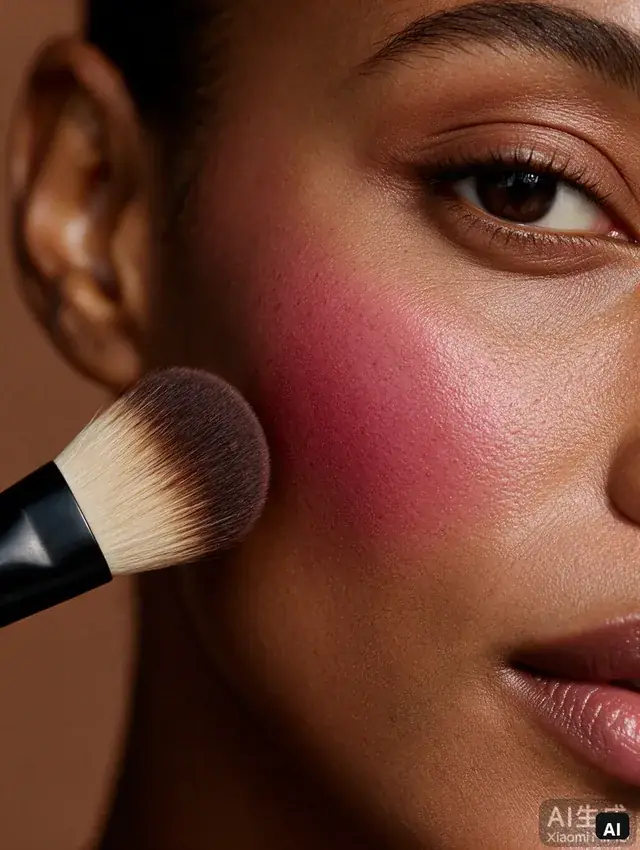
Note jewelry, veins and sun response separately.
Your starting point
Prefer a steady, neutral light.
Cleanest comparison setup.
Note gold and silver separately.
Save your choices or adjust each role.
This planner is an original observation method. It does not diagnose your undertone, predict a foundation match, or validate seasonal color analysis.
Start in daylight or neutral white light. Warm bulbs can push skin and fabric toward yellow and change what you think you see.
Lighting is a condition, not a skin trait. Record the light you used before comparing any two observations.
Note daylight versus indoor light, and whether the photo or mirror adds a cast.
Was this the same light as last time?
Hold a pure white and a pure black reference near the face. Note whether skin reads softer, clearer, or unchanged beside each. This is an observation, not a diagnosis.
A colored wall or gold jewelry adds its own cast. Keep the reference neutral when you want a cleaner comparison.
Write what you see beside white and black separately; do not average them into a verdict.
Does the face look clearer beside cool white or warm ivory?
Gather loose clues: how silver or gold looks near the face, vein color in daylight, or how skin reddens after sun. Clues can disagree; record them separately.
Disagreement is common. It is not proof that one clue is wrong. Keep the notes and avoid a single confident label.
Jewelry preference, vein appearance and sun response each answer a different question.
Which clue feels most consistent in your own notes?
A plan becomes a specific combination only when each candidate has an identity.
0 of 3 preparation checks marked.
This is an original teaching structure: light → neutral comparison → separate clues. It is not a color-analysis quiz and produces no match score.
Use it to sort brand shade labels and candidate pages. Confirm with actual product swatches and, when possible, a professional match. Brand undertone systems differ across companies.
Peach and pink are brand colour-family words, not skin diagnoses. In this notebook, peach usually signals a warm-leaning colour family and pink a cool-leaning one, but each brand writes its own dictionary. Treat the words as filters on a product label: note which brand used which word, then compare two labels in the same light. A peach word does not prove warm skin, and a pink word does not prove cool skin. Unknown stays valid at every step.
Olive describes a green-leaning cast that can sit at any skin depth, from fair to deep. Two frameworks conflict in the wild: one treats olive as its own undertone family, the other files it under "warm olive". This notebook keeps both framings visible and does not resolve the conflict. Record olive as a clue alongside depth, never as a replacement for it. Do not conclude that any shade "works on olive skin" from a brand label alone.
Soft Summer and similar season names are styling themes people use to group colours. They are not a skin diagnosis and not a colour-analysis result. If you use a season theme, build it from your own notes and product labels, and keep swap points visible. Do not treat a collage membership list as a required set, and do not treat a season word as proof that a shade suits you.
Some brands publish undertone options (warm, neutral, cool) on a shade selector. Those words belong to that brand's listing and that line only. The Maybelline Fit Me US listing, for example, shows warm/neutral/cool options on a 40-shade Matte + Poreless line, while Fit Me Dewy + Smooth is a separate 20-shade line and Super Stay Lumi-Matte is a separate 24-shade line. Record which line and which brand wrote the word before you compare two labels. A selector word is not a skin diagnosis and not a cross-brand match.
Record the formula name alongside the numeric shade code. The US selector examples below belong to one liquid formula.
Fit Me Matte + Poreless brand listing · Source notes
Use the three examples below as a reading sample, not a complete shade chart or a personal match.
Use the US Fit Me Matte + Poreless liquid foundation listing. Read each code with its brand classification. The selector supplies no prose shade name. This is a three-code sample, not a full chart.
Read the US brand selector · Source notes
Categories were confirmed in the selector and filters. Do not transfer them to Dewy + Smooth, Super Stay, or other markets. No skin match is established.
Read a shade code only inside the exact brand and formula. The current Studio Fix Fluid table confirms NW30 as medium beige with rosy undertone for medium skin. NC40 wording came from Studio Fix Powder Plus Foundation and is excluded from this Fluid example. For original Tarte Shape Tape, the current confirmed reading sample is 22N light neutral, 29N light-medium neutral, 35N medium neutral and 36S medium-tan sand. Ultra Creamy and travel sizes stay separate. Record brand + formula + code + the brand's descriptor before comparing two codes. These samples are not a full shade chart, a shared alphabet or a prediction of skin fit.
A shade list is only meaningful once you know which product line it belongs to. Three fetched listings show why. MAC states its original Studio Fix matte has been remastered into Studio Fix Fluid SPF 15 24HR Matte (67 shades), while Studio Fix Powder Plus Foundation and Studio Fix 36HR Smooth Angles Concealer are separate products with separate lists. Fenty's older Soft Matte line is distinct from Fluid Flex, Soft'lit and Eaze Drop. Compare only facts attached to the named edition. Tarte lists Shape Tape original, Shape Tape creamy and Travel Size Shape Tape as distinct products even though the imagery shows original and creamy together. Method: name the exact product string, then the shade code, then the brand descriptor. If two shade numbers look similar across lines, that is a naming coincidence until a brand-checked mapping exists.
This US English listing has 44 color options. Read the depth and undertone labels together; decimal codes alone do not measure depth or determine a match. These four examples help you read the list, not predict how a shade looks on your skin. Keep this edition separate from earlier products with similar names. No previous-formula equivalence, older-number correspondence, cross-brand match or wear result is established here.
Check the complete current list
Current product title: Luminous Silk Natural Glow Blurring Foundation. The four entries are examples, not a shade match.
These four codes belong to Pro Filt'r Soft Matte Longwear Foundation on the US English listing. The selector identifies codes, but its readable labels here do not give depth or undertone descriptions. Leave those fields unassigned; color thumbnails cannot establish them. Do not transfer these codes to Fluid Flex, Soft'lit or Eaze Drop.
Check the official Soft Matte selector
Examples identify one line only. They do not establish a skin match, previous-formula equivalence or cross-brand correspondence.
Compare the US Soft Matte line above with the current Armani edition linked below. These are brand descriptions and listing facts, not comparative wear tests or a shade-matching table.
Fenty: exact Soft Matte listing · Armani: current US edition
No dupe, old-number mapping, skin suitability ranking, measured color comparison or wear advantage is established.
A base-product record shows how a brand labels depth and undertone. That is one company label system, not proof about your skin. See a product evidence page →
These sources bound the linked product facts only. They do not verify this guide method or any on-skin result.
Product identity for the linked record and the brand depth and undertone labels used on its 30-name US shade list.
Bounds the linked product record only. It does not verify this guide method and it does not diagnose your undertone.
The separate product-family names used in the edition note.
The current three-code sample has its own source record below. Historical counts and pack strings are not used to specify those variants.
Exact Studio Fix Fluid identity and the currently confirmed NW30 descriptor: medium beige with rosy undertone for medium skin. NC40 is excluded because its descriptor was taken from Powder Plus, a different formula.
Bounds the brand listing wording and the Studio Fix Fluid shade-code dictionary only. It does not verify on-skin colour, does not diagnose undertone, and does not create a directory product record.
Four numeric selector examples, brand finish and coverage descriptions, and two listed pack sizes.
Exact US line only; no depth or undertone assigned to the four codes, no shade mapping or independent wear result.
Original Shape Tape identity, separation from Ultra Creamy and travel sizes, and the currently confirmed labels 22N light neutral, 29N light-medium neutral, 35N medium neutral and 36S medium-tan sand. No full undertone-letter dictionary is asserted here.
Bounds the original Shape Tape listing wording and its code dictionary only. It does not transfer codes to Shape Tape creamy or travel size, does not verify on-skin colour, and brand review or AI summaries on the page are not treated as independent analysis.
No verified shade facts. Use the separate current US color-list source below.
Earlier access history does not establish current shades or equivalence to this edition.
Current product title, US English market, 44 selector options and the four sampled labels.
Current edition only; no legacy formula, old-code equivalence, on-skin or wear claim.
Three codes and their recorded brand depth/undertone categories.
US liquid formula only; no skin-match or performance claim.